

Quick Self Check
Could your kitchen use a 2000-year-old superfood?
Tap every sign that lines up with your week. Whole black seed (Nigella sativa, Habbatus Sauda) has been used as a culinary spice and daily wellness food for over 2000 years across the Middle East, North Africa, and South Asia.
Tick the ones you recognise.
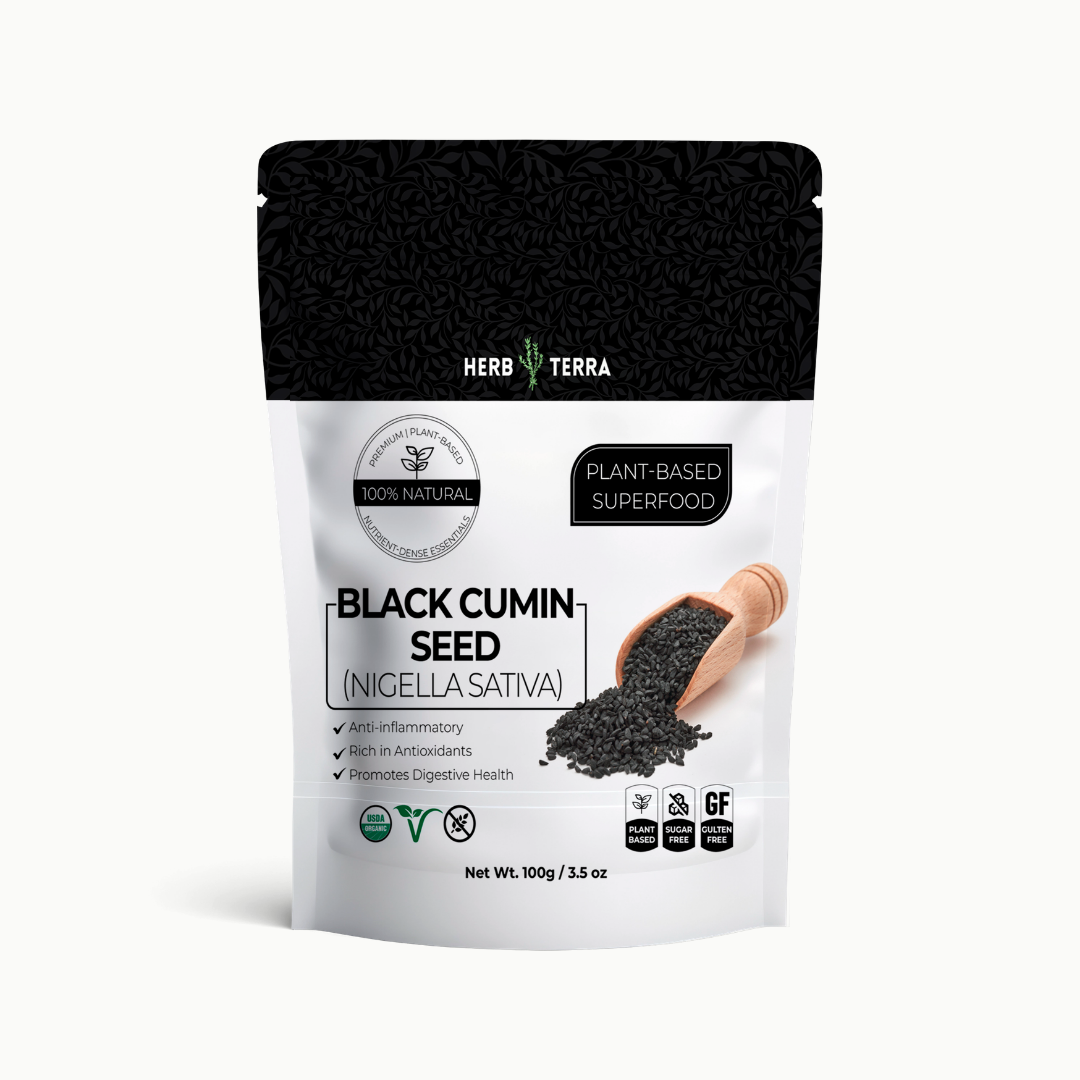
Whole Nigella sativa seeds. Sourced from trusted USA farms, sealed in a resealable ziplock bag. Sprinkle, blend, brew, or chew, the way Habbatus Sauda has been used for millennia.
Why The Whole Seed
Habbatus Sauda. The way it has been eaten for 2000 years.
Daily Immune Support
Whole black seed is the form most associated with the 2000-year tradition behind Habbatus Sauda. Used daily across the Middle East, North Africa, and South Asia for steady wellness support.
Naturally Rich Antioxidant Profile
Black seed naturally carries thymoquinone and other antioxidant compounds in the whole-seed matrix. The whole seed delivers these alongside the fibre and fats of the seed itself.
Culinary Spice + Wellness Layer
Sprinkle on flatbreads, blend into smoothies, brew into tea, or eat with honey. Whole black seed is a daily food in many cultures, not a swallowable supplement. The taste is warm, peppery, and slightly nutty.
Pure Seed, No Capsule
Sourced from trusted USA farms, sealed in a resealable ziplock bag to preserve freshness. No capsule shell, no extracted oil, no fillers. Whole, raw, ready to use however your tradition dictates.
Why The Whole Seed, Not The Oil
Black seed (Nigella sativa) has been called Habbatus Sauda or "the seed of blessing" across Middle Eastern, North African, and South Asian wellness traditions for over 2000 years. The active compound most associated with the modern research is thymoquinone, naturally occurring in the seed. Most modern products extract just the oil; the whole seed delivers the same active compounds alongside the fibre, the fats, and the chewable form that tradition has always used. The seed is also versatile: a daily wellness food in cooking, baking, brewing, or honey-drizzled spoonfuls.
Format vs. Daily Use Profile (directional)
Directional composite across format flexibility, traditional use match, and daily wellness layer. Not a single measured value.
2000+
Years of traditional culinary and wellness use across the Middle East, North Africa, and South Asia. Mentioned in classical Islamic, Greek, and Ayurvedic medical texts.
Heritage of useUSA
Origin of our whole black seed. Sourced from trusted USA farms, sealed in a resealable ziplock bag to preserve freshness.
Source countryWhole
Pure raw seed, not extracted oil. The form Habbatus Sauda has been eaten in for two millennia, and the form most adaptable to your daily kitchen.
Format typeWhat Is Inside
Important notes
Whole seeds are a culinary food, not a swallowable supplement. Not intended to diagnose, treat, cure, or prevent any disease. Consult a healthcare professional if pregnant, breastfeeding, on diabetes or blood-pressure medication, or managing a medical condition; black seed may have small additive effects on either. Black seed is not recommended for use by very young children unless directed by a pediatrician. Start with half a teaspoon and adjust to tolerance. Keep out of reach of children. Store in a cool, dry place; reseal the pouch tightly after each use to preserve freshness.
Warm, peppery, slightly nutty flavour. Origin USA. Single-ingredient whole seed.
Six Traditional Ways to Use Whole Black Seed
Start with half a teaspoon (about 1.5 g) and work up to 1 to 2 teaspoons daily. The taste is warm, peppery, and slightly nutty; the seeds suit savoury and sweet preparations equally well.
Flatbread, naan, or salad
Press a teaspoon onto naan or flatbread before baking, the traditional use across South Asia and the Middle East. Or sprinkle over salads and roasted vegetables for a peppery finish.
Honey + black seed spoonful
Mix half a teaspoon of black seed with one teaspoon of raw honey in a small spoon and take it daily, the most traditional Habbatus Sauda + honey ritual.
Black seed tea
Steep a half-teaspoon of crushed seeds in hot water for 10 minutes, strain, add honey or lemon. The taste is warm and peppery; pairs well with cinnamon or ginger.
Smoothies & protein shakes
Blend a teaspoon into a banana, date, or peanut-butter smoothie. The seeds add a pleasant peppery undertone that pairs especially well with chocolate or coffee.
Curries, dals, soups
Toast a teaspoon of seeds in oil at the start of cooking a dal, curry, or soup, the way kalonji is used in South Asian kitchens. Releases the essential oils and warms the dish.
Straight from the spoon
The simplest path: half a teaspoon of seeds chewed slowly with water. Crushing the seeds with the teeth releases the oils. Most adults find this brisk and peppery.
Build the habit slowly. Whole black seed is a daily food, not a same-day fix. The traditional benefit lands across consistent weekly use. Choose one ritual above and keep it daily; the magic is in the consistency, not the recipe.
Let us be honest
Capsules and oils are convenient. The whole seed is the original.
Black seed oil capsules are easy to swallow. The original Habbatus Sauda has always been the whole seed: sprinkled on flatbread, blended into honey, brewed into tea, eaten with food. The whole seed delivers the same active compounds the oil does, plus the fibre, the fats, and the cultural ritual that has carried the practice across two millennia. Some adults want the convenience of a pill; some want the heritage of the seed. Both paths land somewhere honest.
Without it
A capsule bottle in the drawer, untouched.
You bought black seed oil capsules. Took them for a week. Forgot. The bottle is half-full at the back of the drawer. The slow-build benefit only lands if the daily ritual sticks.
With whole seed
A daily seed-and-honey spoonful.
Half a teaspoon of seed mixed with raw honey, the traditional Habbatus Sauda + honey ritual that 2000 years of tradition kept simple. The daily practice survives because it does not feel like medicine.
Without it
A spice rack with no black seed.
Naan, dals, salads, flatbreads, all without the warm peppery note that has been part of the cuisine for centuries. The wellness layer and the flavour layer both fall short.
With whole seed
A jar in the spice rack, used like cumin.
A teaspoon toasted at the start of a curry, sprinkled on flatbread before baking, or pressed onto a salad. Daily wellness becomes part of the meal, not a separate ritual.
Without it
Buying oil capsules at supplement-aisle prices.
Capsules and oils carry packaging, capsule shells, manufacturing, marketing. The cost-per-serving is higher than the seed itself.
With whole seed
Pure seed, no shell, no extraction.
Whole seed is the most economical form of black seed on the market: no capsule shell, no oil extraction step, no shortcut. A pouch lasts months for adults using it in cooking and daily spoonfuls.
The part nobody says out loud
Why most black seed products miss the mark
Old, stale seeds in cheap packaging
Black seed loses its essential oils when stored in poor packaging or aged stock. Our seeds are sourced from trusted USA farms and sealed in a resealable ziplock bag to keep them fresh from first use to last spoonful.
Confusing the seed with the oil
The whole seed and the cold-pressed oil are different formats with different roles. Capsules and gummies use concentrated oil. This pouch is the seed itself, the original Habbatus Sauda format with 2000 years of tradition behind it.
Whole seeds with no usage guidance
Most whole-seed products arrive with a label and no recipe. Most adults stare at the bag for a month and never use it. This pouch comes with six traditional ways to use it daily, drawn from the cultures that have eaten the seed for centuries.
The original Habbatus Sauda. Whole seed. USA-sourced.
Whole black seed (Nigella sativa) in a resealable ziplock bag. Sprinkle, brew, blend, or chew, the way it has been used for 2000 years.
What to Expect
Your daily black seed timeline
Daily wellness compounds slowly. Here is roughly how the weeks unfold.
Habit Building
Half a teaspoon daily, in your chosen ritual (honey-spoon, sprinkled bread, brewed tea). Get the taste-and-mix balance right this week. The win is locking the time of day.
Quiet Floor Forming
Adjust to a full teaspoon once tolerance is set. The traditional daily-floor practice accumulates quietly. The benefit shows up as what does not happen during a busy week.
Cemented Routine
By month two, the daily seed-and-honey or sprinkled-flatbread ritual is part of the routine. The cumulative wellness layer is the long-game payoff for a busy life.
Pantry Staple
For most adults, whole black seed earns a permanent spot in the spice rack. Not a course, not a phase, just a daily food the way it has been used for 2000 years.
Real Routines. Real Reviews.
What customers are saying
57 verified-purchase reviews on Shopee, Lazada and herbterra.com, average 4.98. Shown as written.
Taste:good Tried this brand and some others and realised the quality of their products are really much better. And it comes faster too.
Got Questions?
Frequently asked questions
Same plant, three formats. The whole seed is the original Habbatus Sauda, used for 2000 years as a culinary spice and wellness food. Capsules deliver concentrated cold-pressed oil in a swallowable pill. Gummies pair the oil with honey for a chewable daily ritual. The whole seed is the most flexible and traditional; capsules and gummies are the most convenient.
Start with half a teaspoon (about 1.5 g) for the first week to set tolerance, then move to one to two teaspoons (3 to 5 g) daily. The traditional ritual is half a teaspoon mixed with one teaspoon of honey, taken once daily.
Warm, peppery, slightly nutty, with a subtle bitter note when chewed. Most adults find it pleasant; a few find it brisk. The flavour pairs well with honey, cinnamon, ginger, and savoury oils. In South Asian kitchens, the seeds are toasted in oil to release the essential compounds.
Not for most uses. Chewing the seeds with the teeth releases the oils naturally. For tea or fine baking, crushing or grinding releases more flavour and active compounds. For sprinkling on bread, salads, or stirring into cooking, whole seeds work as-is.
The seeds arrive in a resealable ziplock pouch. Reseal tightly after each use and store in a cool, dry place away from direct sunlight, ideally in a pantry or spice cupboard. Sealed properly, the seeds preserve their essential oils and freshness.
Black seed may have a small additive effect on blood-sugar and blood-pressure medications. If you take metformin, insulin, or blood-pressure medication, please consult your healthcare professional before adding daily black seed to your routine. People on anticoagulants should also consult a clinician.
Black seed is not recommended in concentrated supplement form during pregnancy. Small culinary amounts (sprinkled on flatbread, in cooking) are generally considered acceptable, but please consult your healthcare professional before adding daily black seed during pregnancy or breastfeeding.
2000 Years Of Habbatus Sauda. Whole.
One teaspoon, six rituals, the original black seed.
Pure Nigella sativa whole seeds. Sourced from trusted USA farms, sealed in a resealable ziplock bag. Sprinkle, brew, blend, or chew, however your tradition guides.